
Written by Fiona Kirkland
Playdough has always had a bit of magic about it, drawing us in whether we are in a classroom or sitting at the kitchen table. On the surface, it looks like nothing more than flour, water and oil, yet the moment you begin to squash, roll or shape it, the magic starts to show itself. A simple lump of dough can spark focus, unlock creativity and bring with it a wonderful sense of calm. It really is a timeless material with value for every age, not just the wee ones.
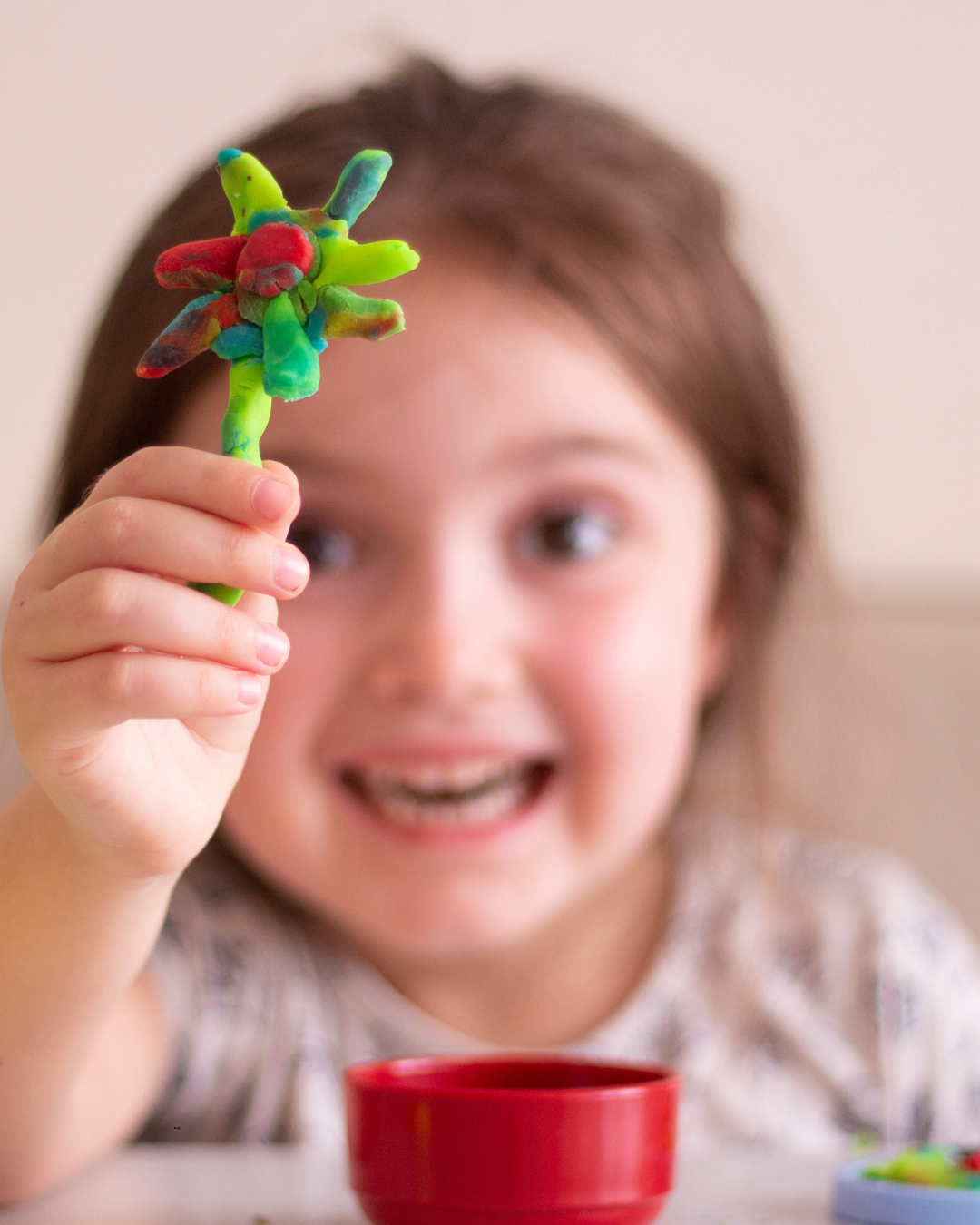
For younger children, rolling, squeezing and squashing playdough is about far more than fun. It is a bridge between those big, whole-body movements and the finer control needed for writing and self-care. As they work the dough, they strengthen the muscles in their fingers, hands and arms, the same muscles they will rely on for holding a pencil, cutting with scissors or fastening buttons. This is that steady, natural journey from gross motor to fine motor skills, and it all happens through play.
As children grow, playdough grows with them. It becomes a medium for creativity and expression, a way to bring their ideas to life. A lump of dough can be anything at all – a cake, a creature, a model or even a message. For older children, this is not just play, it is experimenting with ideas, storytelling and identity. Clay often comes into the picture too. It is harder to work with than playdough and that added resistance makes it a natural stepping stone to sculpture. Both playdough and clay give children a language for thinking and creating. The Reggio Emilia approach talks about the ‘hundred languages of children’ and playdough, alongside clay, is one of those, letting children express ideas that words alone cannot capture. Each time they reshape or rebuild, they are testing, revising and stretching their imagination further.
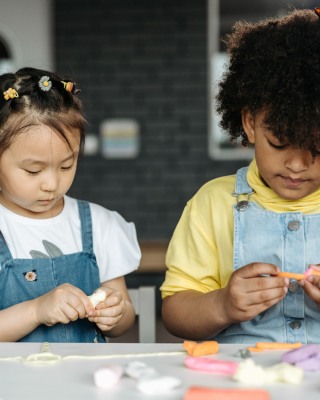 Playdough is also a powerful tool for wellbeing. The simple, rhythmic act of kneading and rolling dough can be calming for both children and adults, a sensory experience that lowers stress levels, supports focus and brings comfort. It is the same reason why some high-powered executives keep stress balls on their desks, or “success-aries” as my son jokingly calls them, and why so many of us find kneading bread such a therapeutic task. Playdough works in much the same way, keeping our hands busy while our minds gently slow down. For children, it offers a quiet pause in a busy day, a way to regulate their emotions and a safe outlet for frustrations, while for adults it serves as a lovely reminder that something so simple can help us to relax, be present and feel well.
When children make playdough themselves, the learning opens up into a cross-curricular adventure. Incorporating maths when they measure and weigh, literacy when they follow the steps, and science when they notice what happens if the balance is not quite right. I will admit, I have had my share of playdough disasters, too much water and it turns into a slimy mess, too little and it will not bind together. I still remember my very first attempt at cooked playdough when my own children were wee. I stood at the cooker stirring away, determined to get the consistency right, and ended up with such a huge batch that it could have kept every child in our town happily supplied for a month! Looking back, it always makes me smile and it reminds me that the messy, slightly chaotic process is often every bit as valuable as the end result.
Through years of trial and error, I have now settled on a recipe that works well. It is salt free, something my local authority encouraged at the time to avoid excess salt intake if children happened to taste it. The older salted versions did keep better, but in today’s hygiene conscious world perhaps it is no bad thing to make it fresh more often. This recipe keeps best if you pop it in a plastic bag in the fridge.
Here’s the recipe I use most often:
· 2 cups of flour
· 3 tablespoons of oil
· ½ cup of warm water
· Food colouring, flavouring or textures if you want to add them
Mix it all together until it comes together in a soft ball, adding a splash more water if it feels too dry or a little extra flour if it turns out sticky, and you will have playdough ready to use in no time.
Making your own means you do not need to worry about the shop bought tubs, keeping colours in the ‘right’ tub, or feeling frustrated when they all get mixed into one big murky brown ball! You can just add food colouring or paint, with a bit of risk assessing, and make fresh, bright batches whenever you like.
Then comes the experimenting, and this is where the real fun begins! Swap some flour for cocoa powder and you have chocolate scented dough. Add ginger, cinnamon and nutmeg for a gingerbread smell that is perfect in winter. Some lavender makes a calming dough, while mint can be more energising. Its texture can be soft, grainy, smooth or glittery, and its colours can be as bright or as subtle as you choose, turning it into a truly multi-sensory experience. The list of things you can add is endless. My own favourite has to be purple lavender playdough with a fine smattering of silver glitter, which sparkles in the light and makes the whole creation feel truly magical!
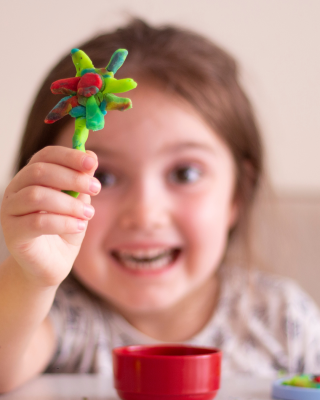 Perhaps the most valuable playdough of all is the one children create themselves. When you hand over the choice of what to add and let them mix and test their own combinations, it becomes so much more. All of a sudden it is a science lab, an art studio, a wellbeing space and a playground for ideas all rolled into one. It is child centred, creative and packed full of problem solving.
So playdough is never just flour, water and oil. It is a medium for expression, a builder of skills, a supporter of health and wellbeing, and above all it is a reminder that the simplest things often open the door to the richest possibilities!
Find more creative and messy play ideas on our website
Share:


