
By Dr V. K. Hillson BDS AFHEA MFDS (RCPSG)
The Problem
According to the Royal College of Surgeons of England (2026), there were 33,976 tooth extractions in individuals aged 0- 19 directly linked to tooth decay during the financial year ending 2025, representing an 11% increase from the previous year. These accounted for 60.5% of all extractions within this age group and 81.9% amongst children aged 0- 4 years. In practical terms, this equates to a preventable tooth extraction approximately every fifteen minutes.
By reducing fear during early childhood and increasing engagement with preventative care, there is substantial potential to reduce progression towards invasive treatment. In turn, this may help prevent children from becoming trapped within the cycle of dental fear, avoidance, worsening oral health, and increasingly invasive interventions that perpetuate anxiety into adulthood.
Could ‘play’ become a part of the solution?
The definition of play remains difficult to determine; although there is a general understanding that play is an activity motivated by active engagement and joyful discovery. Children are frequently observed to be immersed in play, which supports the development of one’s imagination, abstract thought and communication (Sitorus et al. 2025).
During early childhood, play contributes significantly to the formation of neural pathways associated with learning, emotional regulation, and communication (Soules 2021). Thus, I believe it logical to emphasise the importance of encouraging learning through play during these formative years, particularly within healthcare environments where fear and unfamiliarity may otherwise negatively shape future experiences.
Within paediatric healthcare settings, therapeutic play has demonstrated measurable benefits in reducing anxiety and fear prior to medical interventions. A study by Celik and Canbulat Sahiner (2024) examining the effects of preoperative therapeutic play in pre- and early years- school children concluded that those exposed to structured therapeutic play before surgery experienced significantly reduced anxiety and fear levels compared with controls. This reinforces the importance of introducing play prior to commencing examination and treatment within healthcare settings, including dentistry, where anticipatory fear frequently develops at an early age.
Dental phobia
Dental phobia remains highly prevalent globally, extending well beyond childhood and continuing into adulthood. Within daily clinical practice, I regularly encounter adults who openly describe longstanding fear associated with dental clinics and staff, often rooted in negative early experiences. Some of the most rewarding aspects of clinical practice occur when previously anxious patients, both paediatric and adult, gradually become more comfortable and express that it is the first time they have not been afraid to attend a dental appointment.
Research has shown a recurring cycle whereby fearful individuals avoid routine dental visits, leading to worsening oral health, dental pain, and ultimately the need for more invasive treatment, which further reinforces fear and avoidance behaviour (Zsido et al. 2025). This cyclical pattern highlights the importance of addressing fear early, before avoidance behaviours and negative associations become deeply established.
Anxiety associated with healthcare environments can produce measurable physiological responses, including elevated blood pressure mediated through sympathetic nervous system activation, a phenomenon commonly referred to ‘white coat syndrome’ and often reinforced by perceptions of pain, invasive treatment, and loss of control (Pioli et al. 2018). Historically, aspects of dental care have relied heavily on patient trust, with radiographs, diagnoses, and treatment planning not always clearly explained or visualised, which may further contribute to uncertainty and anxiety. To address this, I intentionally adopt a highly visual and communicative approach within my clinical practise by routinely showing patients their radiographs, explaining findings in detail, and using high-quality DSLR clinical photography to demonstrate pathology, diagnoses and workflows. By improving understanding of dental stability and aetiology of clinical problems, patients often appear more reassured and actively engaged in their care.
In younger patients, preventing the development of dental fear is particularly vital. Simply providing a sticker at the conclusion of what may otherwise have been a distressing appointment is insufficient in establishing long-term positive associations with dentistry.
Incorporated techniques and play used in clinical practice and outreach
Children learn heavily through imitation, social interaction, and affiliative behaviours. This is one reason why the ‘tell-show-do’ technique remains highly effective in reducing fear and encouraging cooperation during paediatric dental care (alongside many adults).
Furthermore, integrating familiar and comforting objects into interactions can significantly improve engagement: using a child’s cuddly toy to ‘examine their mouth’ with the dental mirror often transforms the examination into a shared and playful experience rather than a threatening one. Rashid et al. (2021) demonstrated that pretend medical play was associated with lower anxiety levels and improved healthcare knowledge amongst children. Similarly, puppetry and role-play within paediatric healthcare environments have shown positive effects on emotional wellbeing, cooperation, and engagement during clinical encounters (Rashid et al. 2021).
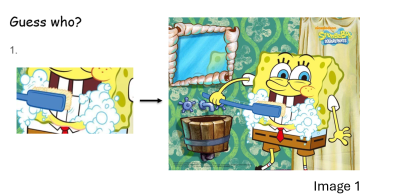
Outside of the clinic and in my outreach work, I have also incorporated a dressing-up activity, where children wear scrubs, masks, visors and gloves over their own clothes in a playful context. When children observe peers dressed in this way, the fear associated with unfamiliar healthcare attire can be reduced. Additionally, I began incorporating a game, whereby the children guess which of their favourite cartoon characters are brushing their teeth (Image 1). I have also found that this typically encourages curiosity, positivity, and engagement whilst subtly normalising clinical environments and dental care.
Research has also demonstrated that infants and young children show strong preferences for faces and socially engaging stimuli (Frank et al. 2009). As a result, I often create balloon dolls from clinical gloves during paediatric interactions (Image 2). This serves several purposes: firstly, introducing children to the sensation and appearance of gloves in a positive and playful manner; secondly, encouraging positive emotional associations with healthcare interactions and the dental environment. Over time, instruments are introduced using friendly names such as “Peter Pointer” for the probe and “Mikey Mirror” for the dental mirror. These small but intentional adaptations frequently transform initial fear into curiosity and engagement.
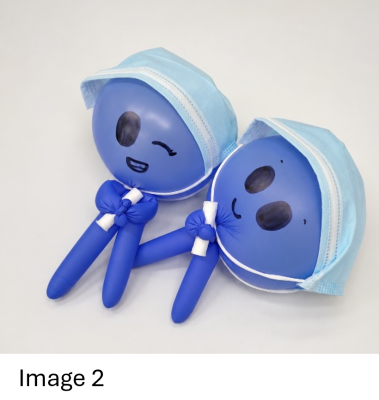
Using these approaches in my own clinical practise, I have witnessed numerous children who initially entered the surgery crying or unwilling to engage gradually become more comfortable through interaction with glove dolls, cotton wool rolls, mirrors, and playful communication techniques. This often allows comprehensive examinations to be completed successfully, supported by praise-based positive reinforcement and encouragement throughout the appointment. Importantly, these methods aim not merely to facilitate a single successful examination, but to shape future attitudes towards dental attendance and preventative care.
References
Celik, B. and Canbulat Sahiner, N. 2024. The effects of preoperative therapeutic play on anxiety and fear levels in preschool children. Journal of Pediatric Nursing 78, pp. e244–e249. doi: 10.1016/j.pedn.2024.07.012.
Frank, M.C., Vul, E. and Johnson, S.P. 2009. Development of infants’ attention to faces during the first year. Cognition 110(2), pp. 160–170. doi: 10.1016/j.cognition.2008.11.010.
Pioli, M.R., Ritter, A.M., de Faria, A.P. and Modolo, R. 2018. White coat syndrome and its variations: differences and clinical impact. Integrated Blood Pressure Control 11, pp. 73–79. doi: 10.2147/IBPC.S152761.
Rashid, A.A., Cheong, A.T., Hisham, R., Shamsuddin, N.H. and Roslan, D. 2021. Effectiveness of pretend medical play in improving children’s health outcomes and well-being: a systematic review. BMJ Open 11(1), p. e041506. doi: 10.1136/bmjopen-2020-041506.
Sitorus, R., Siregar, K. and Sari, R. 2025. The Role of Play Based Learning in Early Childhood Development. Educia Journal 3, pp. 1–14. doi: 10.71435/610424.
Soules, M. 2021. Play Attention. New Explorations: Studies in Culture and Communication 2(1). Available at: https://jps.library.utoronto.ca/index.php/nexj/article/view/37383 [Accessed: 28 May 2026].
Zsido, A.N., Kiss, B.L., Coelho, C.M., Matuz, A., Rahvard, P.P. and Birkas, B. 2025. A machine learning approach to investigate the role of fear of pain, personal experience, and vicarious learning in dental anxiety. BMC Oral Health 25(1), p. 600. doi: 10.1186/s12903-025-05973-9.
Share:


