
Playful Edinburgh: how could our capital support every child’s right to play
Over the past few weeks, we’ve had the pleasure of supporting two events in Edinburgh exploring an important question: what would a city designed for children look like?
Edinburgh Through a Child’s Lens organised by Simpson Studio at A&DS:SpACE in the Edinburgh Futures Institute and Play in the Community, hosted with NHS Lothian and City of Edinburgh Council, brought together academics, policymakers, charities and practitioners to begin conversations around the development of a play strategy for Edinburgh.
For Play Scotland, it was an opportunity to bring together two important parts of our work: listening to children and young people, and supporting the policy and planning changes needed to make their ideas a reality.
What gets in the way of play?
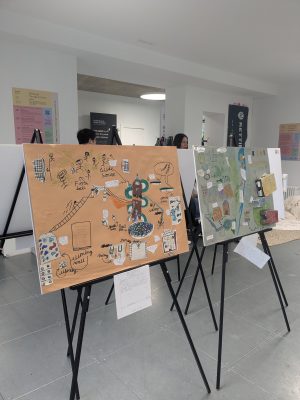
Edinburgh Through a Child’s lens hosted an exhibition of work by children. The children raised big issues through their work, including climate change, accessibility, and homelessness.
Across both events, we heard about many other barriers that currently prevent children and young people from making the most of their communities.
- Practical challenges: maintenance, limited funding and the competing demands placed on public space. Not enough spaces for teenagers, with teenage girls in particular often have few places designed with them in mind.
- Cultural barriers: concerns about antisocial behaviour and parental risk aversion. Young people can feel unwelcome in public spaces
One key point that was discussed was the use of streets as spaces for play, being overtaken by a need for parking. At Edinburgh Through a Child’s lens, Tim Gill talked about car normativity – the assumption that streets are primarily for moving cars, with everyone else expected to get out of the way. This can impede children’s independent mobility and access to space to play.
Creating a more playful city isn’t only about changing physical spaces. It is also about changing culture, confidence and expectations.
Building the city children want
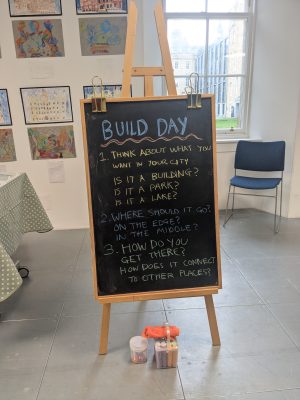
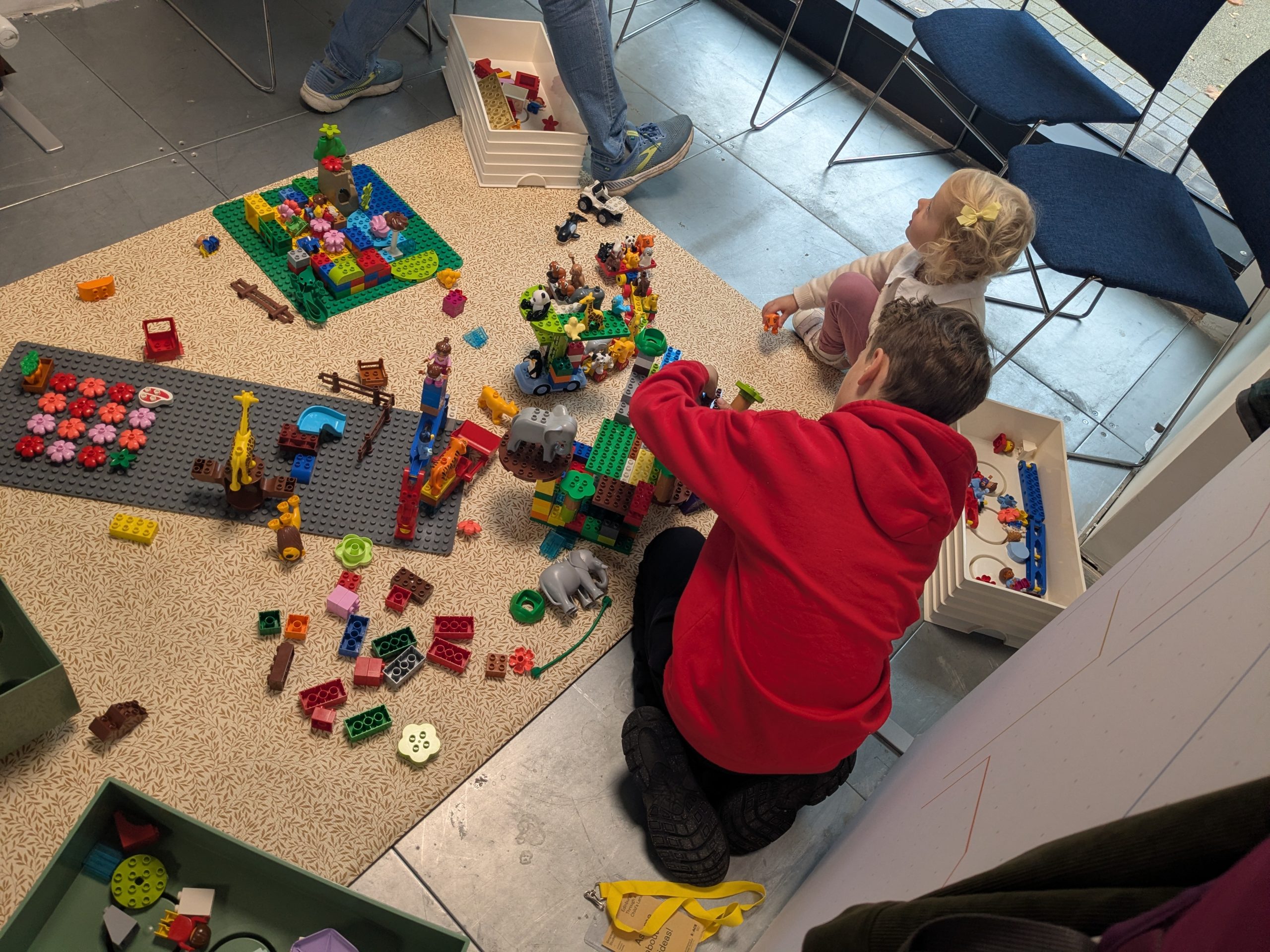
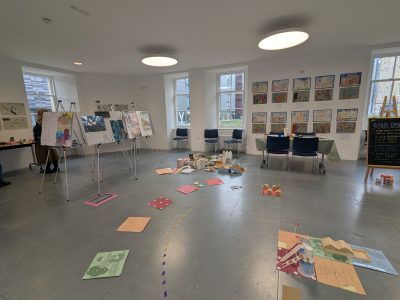
As part of Edinburgh Through a Child’s Lens, we supported a Build Day, inviting children into the exhibition space to get hands-on and build their own vision of an ideal city using loose parts. We were surrounded by art and sculptures by children from schools across the city. The art made in the space echoed themes from the wider exhibition. Children want more play, they want bright colours, they want water, trees, and nature, and they want the city to work for everyone with action on homelessness, the climate crisis, and accessibility. Children imagined a colourful city, full of things to do, places to explore, and opportunities to connect. This echoes research we have undertaken as part of the Play Park Renewal Fund and in the Play Sufficiency Assessments we have supported.
Beyond the playground
One of the strongest themes from the discussions was the need to think beyond the traditional playground. As the late Colin Ward famously suggested, “You can measure the child friendliness of a city with inverse proportion to the number of play parks.” Whether or not we take this literally, it raises an important question: what if play was woven throughout the city, rather than contained in designated places?
- utilising school playgrounds as resources outside of school hours
- planning schools as centres for the community such as Liberton High School
- playful routes and natural spaces that are welcoming for open ended play
- opportunities for expanding school streets and play streets, traffic calmed and traffic-free places
- utilising playworkers to encourage outdoor community play
- outdoor ‘Bookbug style’ playgroups and forest-school approaches
Discussions across the events highlighted the need for places for different ages and different uses. An ensuring that parks are unique and offer different and exciting opportunities and that they don’t all look the same.
Play doesn’t always need expensive, fixed equipment. Often, the landscape itself can provide the invitation to play and has high levels of affordance. This could include opportunities to play with water, landscape and loose or natural materials. It could mean a hill to roll down, a sculpture to climb, a place to sit, somewhere to meet friends, or simply a street where children can play without being treated as a nuisance.
There was also a strong appetite for places that offer more than play alone: social spaces, seating, toilets and lighting, alongside opportunities for different ages and different uses.
By provided opportunities for challenge and risk, a city can support children to develop independence, confidence and resilience.
Connecting local action with national policy
At Play in the Community, our Engagement, Participation, and Events Officer, Jenny Lester, had the opportunity to present on the policy context for play in Scotland, sharing the progress being made nationally.
Our presentation highlighted our work supporting the Scottish Government’s Play Vision Statement and Action Plan, and how Play Sufficiencies Assessments are supporting local authorities to make play a more integral part of how we plan and develop communities. Interesting discussions followed about how to plan for play, and ideas about utilising data we already have including from health, education, and play sufficiency assessments to identify where action can have the greatest impact.
A playful future for Edinburgh
There is a real sense of opportunity and excitement in Edinburgh – and across Scotland. The growing focus on play at both local and national level gives us a chance to think differently about what a child-friendly city can be and how they can be good for everyone.
At Edinburgh Through a Child’s lens, Tim Gill described a child as an “indicator species” for a city. He explained that if children can move around independently, spend time outdoors, play in their neighbourhoods, meet friends and feel welcome in public space, there is a good chance that the city is working well for everyone.
In discussions we talked about moving beyond simply providing playgrounds and start thinking about playful places. We can design streets where children can move and play. We can make better use of school grounds and community spaces. We can bring nature and play together. We can create opportunities for children of different ages to meet, explore and spend time outdoors.
If we want Edinburgh to become one of the best cities in the world for children to grow up in, children’s experiences and ideas need to be part of the decisions that shape streets, parks, schools, housing and public spaces. It is important not just to listen to children and young people – but to act on what we hear.
—
We are always delighted to support local authorities and bodies to listen to children and young people and to plan for play. If you would like to work with us to plan for play in your area, please get in touch with jennylester@playscotland.org
Share:


