
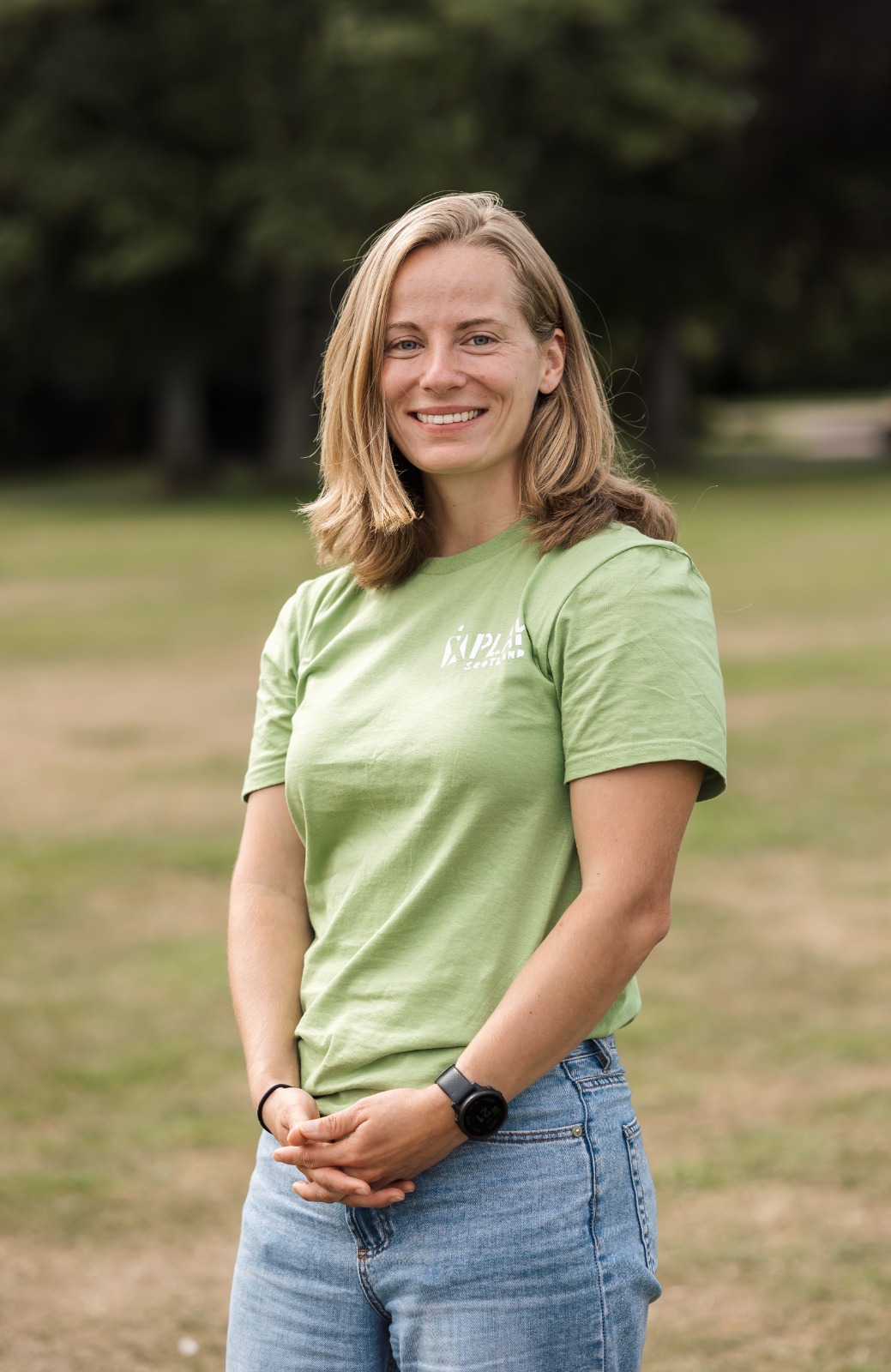
Play has not always been a serious scholarly interest of mine. It became one last summer after I welcomed my nephew into the world. As a first-time aunt, I felt excited to play with my nephew and introduce him to all the games that enchanted me as a kid. But the more I thought about it, the more I realised that what excited me most was incorporating play back into my life. In my late twenties, play felt like something that had been absent in my life for years.
When I started graduate school at the University of Wyoming in the fall of 2024, I knew I wanted prioritise play—both as a subject to study as well as an activity to pursue. I spent most of last year studying play as it relates to place and climate, diving into a labyrinth of theory and pedagogy. It became clear to me early on in my research that play needed to be protected and promoted, but I still had no firm grasp of what that looked like in practice.
That changed this summer, when I had the opportunity to spend four weeks volunteering with Play Scotland through the University of Wyoming’s UW in Scotland Program.
The team welcomed me with warmth and took time to help me understand what exactly they do to make children’s play a reality in Scotland. Most importantly, Jenny Lester, Engagement, Participation & Events Officer at Play Scotland, identified projects in which I could contribute my communications skillset and be creative.
These projects included two booklets on low-cost play ideas, one for when it rains (which I learned is often in Scotland!) and one for games to play using just pen and paper. The mere act of creating these booklets—from the brainstorming to the writing to the designing—felt like play itself.
In addition to these booklets, I worked with Jenny on creating an educational video on Benefit Risk, which has since been posted on their YouTube channel. The Play Scotland team made sure I had the opportunity to see Benefit Risk in action, taking me to the Baltic Street Adventure Playground in Glasgow for a day trip. Even though I’d read about Benefit Risk, it was still shocking to see children jumping off wooden platforms onto mattresses, swinging on ropes, and using tools like hammers. In America, we seldom have playgrounds that let children play with such risk. We also seldom have playgrounds that prepare food or invests so deeply in relationships with families and neighbours. By the time we finished our tour at Baltic Street Adventure Playground, the space was alive with play, buzzing with people of all ages. It was special to see the impact Baltic Street has had on the community, and to see Benefit Risk in action!
During the trip to Glasgow, Cherie Morgan, Director of Play Projects, also introduced me to Café Hope and The Children’s Woods. I was struck by the ways in which communities claimed spaces in the urban environment to connect, play, and gather, and the ways Play Scotland partners with these groups to promote their mission.
My time with Play Scotland culminated with a celebration of the United Kingdom’s National Day of Play on August 6th. Over 500 attendees attended the event in Aberdeen at Duthie Park, which Jenny had been planning for months. Children ran with kites, played with loose parts, listened to stories, used their hands to make messy art. Celebrating the National Day of Play, as well as the end of my placement with Play Scotland, with this event was such a treat.
My final day working with Play Scotland was spent conducting a focus group in Dunbar, where a community playground had recently been renovated to include more accessible play equipment. Jenny and I surveyed and played with a group of ten or so children with disabilities to understand their reactions to the new equipment. While most of the new equipment was enjoyed by the children, some of the new equipment could not be used as intended for various reasons, highlighting why Play Scotland’s work is so important. There is still work that needs to be done to make play a reality for all children, but I left my last day confident that Play Scotland and all the other play organizations are working tirelessly to fulfill that mission.
I returned to the University of Wyoming in August and found that a playground I walked by nearly every day last year had been removed over the summer. A closing school closed the playground with it. But, thanks to my experience with Play Scotland this summer, I know that communities can reclaim space and create pop-up play opportunities even without a set of monkey bars and shiny slide. Play Scotland has given me confidence to do this in my own community.
A huge thank you to Jenny Lester, Cherie Morgan, and the entire team at Play Scotland for taking me in this summer. And thank you for the University of Wyoming and the UW in Scotland Program for supporting the opportunity with funding.
Share:


